Posted in Classroom Examples, Genius Hour, Why Unlearn?

Overcoming obstacles when transitioning to a passion based classroom.

motivational-Quote-on-obstacles-doubters-mistake-hardwork

The countdown is on here in Ottawa and we will head back to school in T-minus 1 week. I am super excited to get back into the classroom as I am feeling relaxed and recharged after some time away from school and have enjoyed some amazing family time and travel throughout the summer.  I have also been reflecting on the past school year, reading books such as A More Beautiful Question, Social Leadia, Code Breaker, The Wonderwall and Pure Genius, listening to podcasts, chatting with like minded people, connecting with community people and organizations that we will be working with in the fall and have been wrapping my head around what next years classes will look like.  

research-roadblocks-hero

Although I am excited and feel rejuvenated I am still anticipating a few roadblocks / obstacles in my unlearning journey. Some obstacles I have already dealt with, while I am sure there will be new ones that pop up as we go.  Below are three of the most frequently asked questions I get about transitioning into a passion based / inquiry classroom.  If you are not sure about the unlearning that is happening in our classroom you can check out some of my earlier posts that outline our journey.

The art of letting go…how I transitioned to a Student Centred Classroom

Students are suffocating and we need to do something about it.

How do I incorporate inquiry, innovation and all that other stuff they want me to bring into my classroom?

My Students do work even though I don’t give them marks…SAY WHAT???

Creating an Authentic Audience, using Social Media in the Classroom


FAQ


Does your Admin support this type of learning?

YES!!  I would argue that most administrators have jumped on this bandwagon and are looking for teachers to take risks and try out new things.  They too are unlearning and figuring out how to support these types of classrooms. I have found that communication is key in getting support of your administrators.  Explain to them the what, why and how of your vision and I can guarantee that they will be on board.

Roadblock: Board policies – Some of the biggest issues that I have faced when trying to change things up are understanding all the board policies, rules and regulations and staying on top of paperwork.   The unlearning process can be tough and these rules can be a huge deterrent for teachers, as most are rule followers. Experiential learning can be tough when there are all kinds of hoops to jump through.  Also as a teacher it is often tough to stay on top of all of the paperwork during the school year.

Suggestion:  Obviously there are rules that cannot be broken, but having an open dialogue about some of the archaic rules and regulations can help in finding ways to work within them.  When it comes to paperwork, work with whoever is in charge of field trips and get them to help you with it at the beginning of the school year. I am super lucky to have an administrator who helps me with it all 🙂  I am hoping to get as much paperwork completed before school starts so that it can be sent home right away, get it collected and let the hands on learning begin.

How do you get Students to buy in?

At the beginning of the course I spend an entire week with my new students in grade 10 (I have taught most of my grade 11s and 12s before so I will have an altered version of this) having them go through an “unlearning” process.  Instead of going through a course syllabus we discuss things like skills and characteristics employers are looking for in their new employees, the changing world that they live in that requires a more entrepreneurship and philanthropic mentality, we discuss creativity and innovation and look at how school has conditioned them not to think or be creative and finally we discuss the fact that society has failed them in convincing them that failure is a bad thing.  We watch TED Talks by Sir Ken Robinson (Creativity & Innovation), Angela Duckworth (GRIT) , Carol Dweck (Growth Mindset) and I tell them that FAILURE is expected in my classes. We talk about assessment and how it has prevented learning for the sake of learning but “learning” for a grade. We discuss that the process is what we will be focusing on rather than the product. We talk about the need for them to network and learn how to use Social Media in a meaningful way.  

Roadblock: By the end of the week I would have to say that I have a quarter of the students who are super pumped, half of the class that are a little confused but intrigued by this new method and then there is the last quarter who have been very successful in school and are very weary and still ask me, so how do I get a 90 % + in this course?

Suggestion:  Keep reiterating the importance of process to all students especially the ones who just want to know what they have to do to get the 90%.  Eventually they will understand that if they take a step back and try and figure out what they are interested in and passionate about the 90s will come.

How do you get Parents to buy in?

At the beginning of the semester I send an email to all of my students parents introducing myself, explaining what we will be doing over the semester and following it up with my teaching philosophy.  My introductory email is intended to have parents “unlearn” how school works and understand that in order to support their child in their learning they will need to “relearn” the way things work. I continue to email parents about once a month about what is happening in the class so that they can continue to support their children.  The students are all on Twitter so they should be able to follow what is happening and I share everything that we are doing via Twitter as well.

Roadblock:  Even though most parents are supportive of what we are doing, they are still very concerned about the mark.  I get where they are coming from, because unfortunately as of right now that is what will get their children into University or College.  

Suggestion: Again, I really believe that the more you dialogue with parents, the more they will jump on board. If students are working on passion based projects, it is inevitable that everyone’s “marks” will be great!!

I am NOT an expert, just a teacher trying to model risk taking, trying things out, failing and learning from each failure.  I am happy to share the good the bad and the ugly and love chatting with others about what they are doing.  

Thanks for unlearning with us.

Cheers, R
 

Posted in Classroom Examples, Why Unlearn?

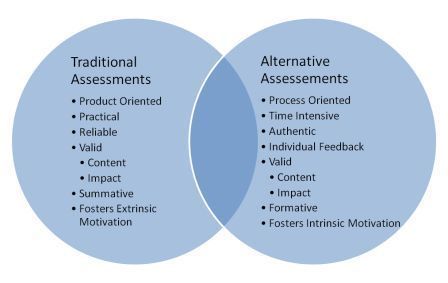
How do you assess authentic learning?

authetic assessment

Picture from https://abdao.wordpress.com/2015/07/18/traditional-vs-authentic-assessment/

While I don’t think that we really can or should formally assess authentic learning, we still work in a system that requires it.  So here is what I am doing until things change….

The third week of summer is here and I have had some time to unwind and I am starting to relax and reflect on the last school year.  As crazy as this may sound I have already started to think about how we will do things next year. I am a huge advocate of authentic learning and have been trying to spread these ideas via this blog, on Twitter and by talking to anyone who is interested in listening to me!!  I am super excited about the connections that I have made this summer for next school year with Woodroffe HS GLP classes, VIVA Barrhaven Retirement home, Ontario Early Years, CHEO and Barrhaven Kids Spreading Kindness. As mentioned in many other posts, I want to provide my students the opportunity to figure out what they are passionate about, to learn how to learn (on their own), to become more digitally literate, to become creators rather than consumers, to become more globally aware and connected, to be entrepreneurial minded, to focus on the process rather than the final product and to build resilience by learning that failure is good and essential to everything we do in life.  A month or so ago my students were interviewed by CBC.  In the article they were able to share their thoughts about our classroom, it was super exciting.  Since then, I have been fortunate to connect with educators who are interested in finding out what we are doing.  I am SO happy to share it with them, everyone listens intently and has lots of questions but the most consistent question that I get is how do you assess your students?  
So, how do you assess authentic learning?

I have some answers, but this is still very much trial and error in our classroom.  Assessing authentic learning is tricky because in the “Real World” or every day life assessment looks very different than in school.  It is super hard to mirror real life assessment when you have to come up with a grade. I believe that our current way of assessing is very outdated, but unfortunately it is still a part of our reality.  So until things change, below are some examples of what I have been trying out in my classes.

Informal, one on one discussions

Throughout the semester I am constantly having discussions with students about what they are working on.  We discuss successes, failures and I am able to support them one on one which is awesome. However, sometimes there is not enough of me to go around.  I am working on getting volunteers / mentors into the classroom to help me with this. By doing this I keep a running tally in my head of where students are at and how they are doing.  There is no formal assessment here, but rather feedback – this is in my opinion more reflective of the real world. I have been fortunate over the past couple of years to have peer teachers in my class (grade 11 & 12 students who have been through my classes already).  They have been super helpful!!

Formal / Informal assessment Twitter Feedback

On a weekly / biweekly basis students receive feedback on their Twitter feed based on the checklist below.  Twitter is where they share all of their learning. I give them feedback to make sure that they are staying on top of things.  This gives me the opportunity to get to everyone when I haven’t been able to have a one on one discussion with everyone.

Twitter Checklist

  • Follow organizations that relate to the course material.  Build your network.
  • Retweet / Quote articles from these organizations – what are your thoughts on it?  What do you think people should know about this article / Video / picture etc.
  • Follow Twitter Accounts of things that you are interested in outside in your real life.
  • Tweet about things that are happening in your life inside and outside of our class.
  • Tweet about things happening in class.
  • Organically interact with your classmates. Comment on things that you think are interesting, ask questions, chat appropriately back and forth.
  • Tweet about what you are working on.
  • Ask questions to professionals to help with research.
  • Connect with people who care about your issue by tweeting at them.
  • Make people aware of the issue that you are looking at.
  • Use Hashtags to connect with others who care about the issue that you are looking at.
  • Get noticed and attempt to make a difference.

Informal / Formal Assessment – Reflection

Throughout anything that we work on the students are informally reflecting on what they have been doing via Twitter.  Each day students are given questions that they have to answer and share with the class. These are not assessed. However, at the end of everything that we do the students are asked to reflect on the process on whatever has just been completed.  It could be an awareness campaign, Genius Hour or their Social Science Fair. I have been working on a rubric that assesses their ability to really be honest and reflect on what they did and didn’t do well and what their next steps are. This is where the majority of their marks come from.  I wouldn’t say this has been perfected but I am going to continue with this next year.

While I think the above is working pretty good, there is always room for improvement. Below is where I hope to take the focus of assessment in our classroom.
Next Steps….

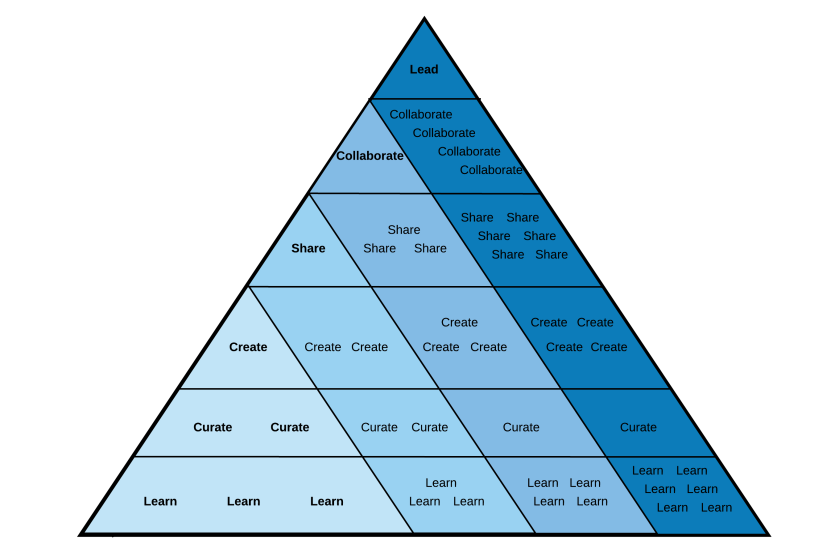
DItSM PyramidPicture courtesy of Nate Green

I have been SO fortunate to have connected with Nate Green who is a technology integration and information specialist at Flint Hill School in Oakton Virginia.  I first heard Nate on Don Wettrick’s StartedUp Podcast and immediately contacted him.  Nate teaches a course called “Passion Based Learning Through Social Media” and when I heard him talk about it on the podcast I knew I needed to talk to him.  I have jumped right into changing the way we do things in our classroom but have struggled with the whole assessment piece. Nate was kind enough to share how he was doing things.  He really focuses on moving students from passive learners to creators and curators and eventually leaders. I plan to use his pyramid seen below to help guide students through the course and for assessment.  I am thinking that the pyramid will coincide with our 4 Levels. I do however, believe that the pyramid / assessment piece will look different for the different grades. I am still mulling this over. I am open to suggestions if anyone has any!!

Thanks for unlearning with us 🙂

Cheers,

R


Posted in Why Unlearn?

What do you need for experiential learning to happen? Community partners, open minds and creative timetabling.

experiential learning cycle

http://www.edu.gov.on.ca/eng/general/elemsec/job/passport/CommunityConnected_ExperientialLearningEng.pdf

I am super excited to be teaching a new course next school year.  It is called Child Development and Gerontology. The course itself is great, but what I am really excited about is the fact that it is going to be a dual credit course.  That means that I get the same students for an entire afternoon!! Wooo Hooo!!

Why am I so excited you may ask??  Well I have been trying for years to build a more experiential hands on approach to learning and it has been tough.  It is really hard to go anywhere when you are limited to 75 mins. It is pretty tough to create community connections unless they come to you.  But now we will have a whole afternoon to connect and experience, I am so PUMPED!!

I will, however continue to teach 4 sections of regular Social Sciences in 75 minute blocks.  I will continue to try and provide an experiential experience for all of my students by arranging doable field trips (to our local elementary school across the street), baby groups with local parents, visits with seniors, guest speakers, BYOG (Bring Your Own Grandparent) and a new one BYOGS (guest speaker) but the reality is they are still not getting their hands dirty and jumping into the community.  

So….I will continue to fight to make all of my courses experiential, but in the meantime I will work with what I have got in my dual credit course next year.  This is what I am thinking about doing….I’d love to hear any other ideas if you are doing something like this already!!

Dual Credit TOJ4C / IDC4O Child Development and Gerontology

My goal is to expose all of my students to as many careers / experiences with community partners that are willing to connect.  We would likely visit these places for the first three weeks or so of the course. My hope would be to have the students interact and get hands on experience in those first three weeks.  So far I have connected with an elementary school, WHS General Learning Program and a retirement home. I am have a few other feelers out there right now. From there the students would choose where they would like to work.  If a student wants to spend their whole time with one group that is fine but if other students would like to try working with different groups than we will set up mini placements.

Week 1 – Learn about the Inquiry Process, Social Media.

Week 2 & 3 – In small groups go out and meet and work with community partners.

Week 4 – Set up personalized schedules and get into working out in the community and start to look for problems to solve.  (Mentors and teachers may need to help with this).

 Week 5 – See below – I foresee a mix of in class to work on inquiry, solution and reflection and out of class hands on work.
Task # 1 Inquiry – Research & Social Media

Next steps would be for my students to work within those community organizations and complete an inquiry.  After spending time at their placement, they would come up with a question / problem that they want to get an answer for and they would work on getting the answers by completing primary research while at the placement and secondary research while at school.  The purpose of this task would be for them to learn research skills, get hands on experience and at the end they would share what they had learned from the inquiry process with their peers and the world via Social Media. They will be required to chronicle their learning via at least one social media platform: Instagram, Twitter, blog, podcast, vlog or anything they want.  I am toying with the idea of having all them create Linkedin accounts to start connecting and showcasing what they are doing.

Task # 2 – Find a Solution using Design Thinking & Implement it

content_designthinking

Stanford d.school Design Thinking Process

With the problem that they looked at in Inquiry # 1 students will come back to class and work through the design thinking process to try and come up with a solution to the problem.  I am not 100 % sure what this is going to look like – it may well be very different for each student. Some problems may take the entire semester to work through, while others may be more simple and not take as long to solve.  My hope is that they will be able to implement their solutions. I’m not sure how this will go, but I am excited to try it out. I am sure there will be some ups and downs, but that is how I roll…..

Task # 3 Showcase, Network, Resume & Linkedin

At the end of the semester we will invite important people to showcase what we have done and share the solutions that came up with and hopefully implemented.  We will share our successes and failures and more importantly our growth. This showcase will also work as a networking opportunity for students. They will be able to make more community connections…it’s not about what you know but about who you know, right Don Wettrick?  Their final task will be to create or update their resume and Linkedin profiles with their experience from the course. Who knows what the will have created to fix a problem, what I do know is that the experience is going to the most valuable asset to employers.

Concerns

And of course there are all the concerns that are floating around in my head…how will I assess them?  How will I keep track of all of them?  How will I support 24 students personalized learning?  What if students don’t show up?  What if we let down our mentors?  What if they don’t come up with a solution?   My philosophy is to forge ahead and deal with it as it comes.  I will have a plan before we get started but I know that I will need to be flexible, that is how life works.

This summer I have meetings lined up to connect with community members that are interested in participating in this experiential learning experiment.  If you know anyone or are interested in participating please let me know 🙂

Thanks for unlearning with us 🙂

Cheers,

R

Posted in Classroom Examples, Why Unlearn?

Are exams relevant anymore?

Today’s classroom        vs    Today’s workplace

If 21st Century Competency Skills are leaning towards the 4Cs should we get rid of exams?

At the end of each course in Ontario high schools students have to complete a summative task that is worth approximately 30% of their final mark.  Traditionally this included a culminating task for the course and a final exam. Up until about four years ago I abided by this summative task and had my students complete a traditional summative and exam.  However, unknowingly to me, my unlearning journey had begun and we made a shift from traditional tasks to more reflective tasks in the traditional model. My students still did their summative and exam but it became a time for reflection that was assessed on their ability to do just that – not what they knew about the course material. Fortunately for me a few years ago teachers were given the greenlight to use their professional judgement and decide what we saw fit for a summative task for our courses. As I continued to unlearn I didn’t think that testing my students on the course content really worked well with what academics were suggesting were 21st century competency skills The 4Cs: communication, collaboration, critical thinking and creativity.  Many will argue that if we don’t test and give students exams they will not be prepared for University – I call BS on that.  I argue that if we teach the students skills and to be lifelong learners they will be able to do anything, including taking tests if they have to.  So last year we scrapped the exam completely and moved onto what we call Exit Outcome reflections and the Social Science Fair instead of a traditional exam. For those interested I will explain what we do below :).  

21st-Century-Skills-4-Cs-graphic

Summative Task Part I – Course Reflection

In the first part of the summative task students reflect on their experience in the course (what they are proud of, what they learned, favourite experience, challenges and failures) and the OCDSB Exit Outcomes.  The Exit Outcomes are five characteristics (Collaborative, Globally Aware, Goal-oriented, Innovative/Creative, Resilient) and five skills (Academically Diverse, Critical Thinkers, Digitally Fluent, Effective Communicators, Ethical Decision-makers) that our board is trying to develop in every student. They are expected to provide examples from course material, experiences and from their personal research to showcase all of the above.  They are assessed on their ability to truly reflect and provide examples. I love reading their reflections, to me this is way more valuable than having them write an exam on only course material. It gives them an opportunity to understand the process and really look at the importance of these skills. I know that ever since we have started to define and understand these characteristics and skills in our classroom it has made me think about how I am working on them as well.  It really gives the students an understanding of WHY we are doing what we are doing and hopefully trickles out of our classroom into their daily lives as well. Students can reflect any way that they want. This past semester I had written responses, mind maps, vlogs and podcasts – I am open to any way they see fit. Below are some examples of the amazing and honest answers from the reflections.
First year unlearners

I failed big time in this course, but I failed forward and I learned a lot more than I thought I would. I learned that it’s ok to fail and its ok to not succeed in everything as long as you learn from it and fix it for next time. I learned that it’s ok to put yourself out there even if people don’t answer which is something that I had a lot of trouble with. I was very scared to reach out and ask for help because there is always the risk of failure and the fact that they might not answer but that is ok.   (KO)

My biggest takeaway from the inquiries was that everyone needs help, the level of help will differ from person to person but so will the ability to ask. People all over the world need help, whether that be because they are hungry, homeless or just need to start a conversation. I also learned that even as grade 10 students we can still make a difference. Obviously we won’t be able to end homelessness overnight but just becoming educated on the subject is a start too changing the issue. (EA)

Through the semester I also learned a lot about who I am as a learner and how hard it is for me to learn independently. I’ve had to learn how to unlearn and while trying to do that I learned a lot about myself and how difficult I found it to focus and stay on task. I’ve learned how talkative I can be and how mark oriented I am and that affected my overall performance but it did help me self reflect in learn new things about myself. (MSS)

Second year unlearners

I will continue to be a moonshot thinker by continuing to believe that nothing is out of reach, to think outside of the box, and to not be afraid to try out new things, because doing all of these things will result in growth. I will choose to be bothered by problems so that I can one day find a solution to the problem. By doing this, I might one day be able to accomplish something that will change the world, because if I believe that I can make it happen, then it will happen. (KV)

 
Third year unlearners

It has been a challenge to unlearn, we are used to learning in one way but now we are asked to do it differently.  I am a bookworm and I like to follow rules and in here we are breaking them and bending them. (ME)
To say it’s been a wild ride would be an understatement, I have been fortunate enough to have had the opportunity to take over six of Mrs. Chambers classes. My first class was grade 10 history when I started out I was just your average student, I knew how to work the system; you give me the work, tell me how you want it done and I’ll get it done just as you asked. The school system had killed any and all creativity inside of me. One day, Mrs. Chambers posed the question “What do you want to learn?” I had no idea how to respond to a question as absurd as that. Impressed at her perseverance and determination; she had finally cracked me. It was a long process filled with more failures than success. I needed to learn how to unlearn. The student I was in that grade 10 history is a completely different student you see today. I don’t need to be told what and how to learn, I have my own ideas, passions and goals for my education. Since beginning this process I have had the opportunity to be able to share my story of how I learned to unlearn with other educators. While speaking to them more often than not I am asked “What about the days you don’t do any work?” I respond with not everyday can be a great day, there are days I am motivated and others where I can’t bring myself to do any work, but it is the exact same if I were to be in a regular classroom. You could give a worksheet and if it’s a day where I’m unmotivated odds are that worksheet is going in my bag and won’t see the light of day until the end of year when I clean out my bag. There have been so many ups and downs and I’m grateful for every up and every down as it has allowed me to grow as a person and only better myself. I think one of the biggest challenges for everyone is not giving up. It’s so easy to quit when things don’t go your way, to give in to the people who want to see you fail. Fail 8 times, get up 9. We are a great group of individuals; each motivated to accomplish a variety of different goals and Mrs. Chambers has been there the entire time, guiding us and shaping us to be successful.  (RM)

 
Summative Task Part II – Social Science Fair

In the second part of the summative task students are asked to come up with a conversation piece that represents their journey throughout the semester that they will present at a drop in style Social Science Fair.  The class invited prominent people from the community, our board, parents and pretty much anyone who would listen to them. The guidelines are fairly open but it is suggested that they incorporate the Exit Outcomes, their inquiries / research, course content, genius hour and class activities – ultimately anything they would like to showcase and explain to anyone who comes to see them.  The only mandatory rule is that they are NOT allowed to do anything traditional like a poster or a powerpoint. We have done this for the last year and half and it has been amazing.

While an exam is a good way to see what students know about a course, I truly believe that giving the students a place to reflect and showcase their learning is of equal importance if not more than an exam.   It allows them to connect with the community, it is a place for students to have a voice and be heard, to share their passions, to share their failures and successes, to get a chance to explain something more than once so that get it right, to engage in meaningful conversations and finally to network.  At our first Social Science Fair one of my students was offered a summer position with the local councilor and another was approached to do some work in social media.

Here are few things that the students had to say about it:

IMG_4094

I think it was really cool to be able to show adults that teenagers are more than just lazy and that when we’re actually interested in something we will come up with amazing ideas.

The fair was awesome! I talked to a lot of people and informed a lot of people about what we learned and how we incorporated the exit outcomes. My favourite part was seeing everybody else’s summative and seeing my peers interacts with others. I learned that there are a lot of people who care about what high school children have to say.

IMG_4103

I really enjoyed it, it was an eye-opening experience none like anything I’ve ever been to before. My favourite part was seeing how interested some guests were in what I had to say. I learnt a lot, it made me better at communicated my ideas since I received feedback and gots lot of practice.

IMG_4113

I really enjoyed the Inquiry fair. I thought that everyone did a good job, lots of cool projects. My favourite part was when I got to meet the mayor and talked to him about my school. But I’d say my favourite part was when I got a job offer with Jan Harder. I was talking to her about my plans next year going into urban planning and she told me that she was the chair of the planning committee for the city of Ottawa. She gave me her contact information and told me that she could probably get me a job next summer in the planning department at the city of Ottawa.

IMG_4587

I think that it went really well, at first it was a little difficult to really communicate what I wanted to say but then after a few attempts and practice rounds it went well. Something that I found was that people were actually interested in what I had to say which really surprised me a lot! Once I started talking, people were getting really excited and engaged about what I had to say and they were really interested in what I learned. I think that my favorite part of the social science fair is the fact that I was able to showcase all that I have learned and the things that I have gotten out of this course into one big project and the fact that I could share it with the community instead of just our classroom and some random people on social media. I thought it was a good way to learn how to communicate your ideas and thoughts out in an interesting and innovative way that will engage people in the community.

IMG_4577

I was super nervous about having to talk to people, and show my summative to all these adults (especially Jim Watson). I think it was because I think of ALL adults as my superiors and they’re smarter, and what if I mess up, and look stupid. (STRESS) But once I started talking it got a lot easier and It just flowed . But overall I actually enjoyed myself more than I thought I would. I think I could say that I learned that putting yourself out there a little bit is always hard, but it’s gratifying as well, because people were very impressed with my work and gave me a lot of compliments (which was nice). I also learned not to stress out as much because even if you make mistakes people are understanding and it’s not the end of the world (even when you mess up your words in front of the mayor). The people that came and listened really seemed genuinely interested in my summative and asked some really good questions, and I enjoyed looking at other peoples projects.
Thanks for unlearning with us 🙂


R

Posted in Student Perspective, Why Unlearn?

“My biggest issue through school is that I’ve never been interested in what I’m learning.”

Disengaged Students

I have had the pleasure of teaching Sean for the past two years.  Sean is very bright and probably one of the most interesting students I have ever taught. If you have been following this blog you will know that I have been trying to change my classroom so that it allows for everyone to find their passion and then connect it to the course curriculum. For most students finding that passion is a struggle, because they have never been asked, but once they go through the unlearning process it gets easier and easier. Sean is one of the lucky ones, he has found a passion already and is doing amazing things with it. Sean is an entrepreneur and at a very early age he began learning about dirt bikes and other recreational vehicles, he figured out how they run and how to fix them.  He then started buying old bikes, fixing them and then flipping them for a profit. How many of us could say that we were making a profit when we were 7 years old?? Here is the problem…..Sean hates school, has never felt all that smart and his skills outside of the classroom have never really been recognized. This drives me crazy, here you have a kid who has learned to learn on his own, taken it upon himself to start up a little business and feels unworthy to his counterparts at school for 6 hours of the day.  Are you kidding me???

So….over the past 2 years Sean and I have been working together to figure out how he can feel good about himself while in the confines of the school.  He was able to promote eating locally (he has a lot of friends who are farmers), advocate and make people aware of the stigma around going to college (University and College are viewed very differently in Canada – University being the one held in high regard) and more recently he is working on writing a blog about his views on education and how it needs to change.  He wrote and published his first post a few days ago and I had goosebumps. The post has only been out for a couple of days and I am not sure that he realizes the impact he is having on all those other students who feel the same way as him. I have already had students come to me and say that his post was amazing and that they really connected with it….this is, in my opinion why we need to unlearn how we do school.

I asked Sean and his Mother if I could feature his post on my blog and they said yes!! Please read his post below and follow his blog The Fault in Our Education for the rest of the semester – he says he’s got lots more where that came from.  

He and students like him are why I am on this unlearning crusade.  There are more out there then we realize.

Thanks for reading 🙂

R

Sean Swayze

My  name is Sean Swayze and I’ve disliked school as long as I remember, School for me has never been something I looked forward to or enjoyed. I grew up in Arnprior, Ontario and attended a public school named AJ Charbonneau. Through public school I was always a pretty average student, I never did exceedingly well but I wasn’t necessarily struggling either. My biggest issue through school is that I’ve never been interested in what I’m learning. Most of the time as I sat in class, my teacher would talk about math or history and I’d be sitting at the back most likely zoned out thinking about Dirt bikes or searching kijiji on my phone as I hid it under my desk. I Guess I never really cared about school, I only did what I had to in order to get through with good enough marks that my parents wouldn’t give me a hard time. I guess I struggled to find the will within myself to put in all the extra effort in order to get an “A” in class. In my mind I just never saw the bigger picture about how memorizing the elements of the periodic table would help me later on in life. The things that really mattered to me were the skills that I learned outside of school. I always had a drive to learn more about dirt bikes and small engines. My parents would make fun of me as it would be almost all I’d talk about, whether it was riding with my friends after school or begging them to lend me money for new parts. No matter what it was I’d make sure no one else got a word in at the dinner table.

My dad had bought me my first dirt bike on my 7th birthday, I can still remember it perfectly. As I started to ride it became my addiction and even if it meant doing laps around my lawn for hours it didn’t matter to me. But then i’d run into problems, My bike would breakdown or something would happen and I wouldn’t be able to ride for days or sometimes weeks. I am, and always have been a very impatient person. I couldn’t handle waiting on dealers to fix my bike and the repairs would get really expensive. I started to want to fix the bike by myself but my dad had no mechanical skills so I decided i’d teach myself. It definitely didn’t happen overnight but now after almost ten years of riding I know the parts of a dirt bike inside and out. It turns out that mechanics was something that came quite easily to me and I really enjoyed it.

Now here I am in grade 11, a student who still doesn’t understand why I’m here day after day. Now I’m not saying school is completely pointless, I’ve definitely learned a few things through my years of school, such as if you don’t show up for class both your teachers and parents will most likely be mad at you. But in all seriousness a student like me who has a different skill set does not have the opportunity to thrive in the education system that we have established today. Just because our skills are not recognized by the way our education system evaluates us it means we are graded poorly and made to feel of a lesser value. In reality we are just as smart but it’s a different type of smart. I have a friend who struggles to read and write, he has always hated school and often wonders why he is there too. By other students he is told he is dumb, yet he can rebuild a motor on his own, he knows how to weld and he has great mechanical abilities, some of the students who are getting extremely good grades struggle to turn a wrench let alone change the oil in their vehicle.

I believe that our education system does fit for some people, they learn the skills that they will need for their future but our students need more options. A student like me who has a different set of skills needs a way to develop those skills and focus on them earlier in their education. I have done so much work that I’ve had no interest in and because of that I’ve felt like I wasted my time, so many of those things I will never use in life, instead I could have been using that time to instead focus and develop the skills that I have strengths in and prepare for my future. This would give me a better opportunity to succeed in what I want to do. Right now in my second semester I have become pretty careless with my education. Summer is just around the corner and I only have a few weeks left until I can go back to grinding out shifts at work and spending every spare minute working on my truck or dirt bike. School has become so seemingly pointless to me that I usually don’t even bring a backpack to school anymore. I took co-op in the morning as a chance for me to get out of a regular classroom and to actually get a taste for what it’s like in the trade. After co-op I come back to school for my final two classes. And to be honest when I’m here it’s not always that terrible but my school day is 7 hours in total. Not to mention the hour drive here, so in total I’m spending 9 hours of my life 5 times a week just to be here. Every week when I look back on what I’ve learned school seems so inefficient to me, 45 hours of my time or more has been spent either here, or getting here and I just feel like there are so many other things that my time could have been better spent on.

Thanks for reading, I now have to leave as I have a dirt bike to buy.

Please follow Sean’s blog here The Fault in Our Education.

Posted in Why Unlearn?

Why not Alternative Options for All?

Alternative-option

It is my understanding that alternative schools are for students who have not been successful in mainstream for various reasons.  I think these schools along with the Ontario Student Success programs are fantastic for the students that they serve. But my question is why can’t we have alternative classes / programs for all students in every school?  I am sure there are funding issues as I know that the alternative sites and the Student Success programs have a much lower student to teacher ratio, but if we had alternative programs in every HS then wouldn’t the need for alternative and Student Success classes be minimized?

This to me is another way that we need to unlearn how school is done.  I am a dreamer and have a vision for school, but am also realistic and know that this will take time.  Students, teachers, administrators, parents and society as a whole have an idea about what school is. Students should show up to classes on time, ready to work, be quiet, wait for instruction, change classes when the bells ring and eat in the allotted time.  They should work hard, especially in the maths and sciences because they are most important, they shouldn’t challenge their teachers, and if it is not in the curriculum there isn’t time to cover it.

Alternative programs focus on the following:

“Students who attend an alternate program are seeking an alternative to the traditional high school setting with a different delivery model. Alternate programs offer students an opportunity to learn at their own pace. Students work on one course at a time, and are able to complete six or more courses in an academic year. The focus is on student directed learning. Student progress is monitored closely and students are held accountable for their work.” (Elizabeth Wynwood Alternative School)

How can we make this happen in mainstream???

I would say ¼ of our students come to school motivated to work, ready to learn and eager to get good grades. These students are engaged inside and outside of the classroom and will be successful in life because they value learning and honestly love the way that they are taught and school in general.  The second ¼ are motivated by marks, they want to be successful and do what they are told. They are smart and have figured out the system, they are compliant and do what needs to be done to earn their mark and move on, I would argue that not a whole lot of lifelong learning goes on for these students.  The third ¼ are doing what they need to do to get by, they are not causing problems but are super disengaged, they get good enough grades to keep their teachers and parents off their backs but are so checked out that they have really learned nothing at all. And the last ¼ are our at risk students. Many of these students suffer from mental health issues, family issues and / or learning difficulties. They have often had horrible experiences in school and have given up and don’t see the value in school.  There is definitely very little learning happening for this group, other than school is not a fun place to be 😦

So if ¾ of a schools population is only motivated by marks, are disengaged or have written off school completely, shouldn’t we be unlearning what happens in our schools?

Part of my vision or argument is that there should be “alternative” programs in every school.  I am not suggesting that all 3/4s of a schools population needs to be in an alternative program or that it should be the only way things are taught, but what if ¾ of the population had the option to do their schooling alternatively?  

Currently students who wish to attend an alternative program have to fit a certain criteria to be put on a waitlist (to me this is saying something about traditional schooling, just sayin’).  What if the criteria was altered a little bit so that those who really need it can get in and those who want it can get in as well?

I often have these conversations with my students and it is really interesting to get their perspectives.  I asked them if they had the option to be in an alternative program for their four years in HS, would they do it? All of these students have been in my class that is somewhat of an alternative program so they have experience with both.  I indicated what group my students and feel like they fall into at the end of their quotes. Here are some of their thoughts.

Yes I would. It would be nice to feel like you are headed in the right direction on a daily basis- I think a lot of kids (or at least me) feel like were just going to school everyday and that our careers are another chapter in life. I actually feel like I’m passing time and days are just going by as I sit in class and complete the work assigned. Part of that is very easy and comfortable, but to me personally it’s also very uncomfortable- it makes me feel like I’m wasting time every single day and that I should be taking it upon myself to start my own career in my spare time so that I actually have something going for me when I’m done high school. I think to have more respect for our own education we need to feel like something is actively happening in an area that we are interested in. If the alternative program was an option and students were choosing to be in it- everyone would be surrounded by people that have a passion to be learning in that different way. If you are surrounded by people who care and want to make change or are actively motivated than you become more focused and motivated.” Gr 11 student (disengaged group)

“I’m not sure if I’d be able to attend a school like that. I believe I’m so used to the traditional way of learning I’d be frustrated with everything. I usually like a lot of organization and when people tell me exactly what to do. But on the other hand, I really like the way your class is and the ideas behind the blue sky school. If my parents permitted it, I might give it a shot.” Gr 11 student (compliant group)

“I’d prefer a combo because on days when you’re just not feeling it, traditional style forces you to hear what teachers have to say. I’d like interest lead as well because it’s more fun and in the end I learn more!” Gr 10 student (compliant group)

“I’d be fully interested in attending a school like that for my four years, as long as I would get the same sort of high school experience. I’d embrace a schooling system like this because I think that I can excel and learn more than in a regular school.” Gr 11 student (compliant group)

“I would like to mention that our schooling is designed for auditory and visual learners. No doubt about it. We are told we have to become those types of learners instead of finding a method or developing a program for kinesthetics  learners which would increase performance overall as a community.” Gr 10 student (compliant group)

“Yeah definitely. If I had the chance to completely re-do high school and focus on my own education I’d get the chance to discover the things that I’m passionate about. It seems like something students going into gr9 aren’t able to do but that’s only because we aren’t given the option to learn about what truly interests us. One of the biggest things that students need nowadays is a network. Putting us into school for 4-8 years as we develop as adults leaves us unable to grow our professional network within the community.” Gr 12 student (disengaged group)

While these students all fit into different groups, I think it is evident that they would be interested in having the option within their own school as none of them would qualify for an alternative program right now.

So, I am going to continue to unlearn, continue to teach my students to unlearn, continue to inform parents about other possibilities and keep trying out new things in the classroom to give my students an alternative option.  But I would love for someday this to be the norm. To end on a positive note, I am super excited that next year my school will be offering a new dual credit course where the students will have more time to unlearn with me. It is not happening until second semester 2019, but my brain is already full of ideas.  It is proof that change is coming!!

Does your school offer an alternative program within a mainstream HS?  If so, I would love to hear all about it. Please connect with me 🙂

Thanks for unlearning with us.

Cheers, R
 

Posted in Classroom Examples

The Good, The Bad and The Ugly of Unlearning.

learning from failure
At the end of last semester, we tried something new out in our classroom. I wanted to give the students the opportunity to really own their learning.  I asked them, what do you want to learn, how do you want to learn it and once you have acquired the knowledge what will you do with it?  We sat down, created action plans and wrote them up on the wall. They were given two weeks to work on it and I checked in with them every few days to see where they were at and helped coach them if they needed it.  During the process, I was convinced that they were doing absolutely NOTHING and I was very uncomfortable. BUT to my surprise on the show and tell day they amazed me with what they had done. We had a workshop on the stock market, a TED Talk comedy routine and some really great discussions.  As a result, I was super excited for what this meant for my next semester class. I decided that my new class would look like this…

Grade 12 University World Issues

GOALS – Over the semester I hope that they will learn – self regulation, self-motivation, time management, empathy, resilience, perseverance, communication skills, self-advocacy, project management, social media skills, exposure to Sustainable Development Goal’s, doing things with purpose, passion.

Over the entire semester, they are to work on six things in total.  Some of them were non-negotiable but 4 / 6 of them were up to them.  The goal would be that we would have one – two days a week for students who wanted to lead discussions or debates.  The other days would be work periods or field trips and/or activities. The expectation was that they would work on all of their chosen individual/group projects over the semester.  They were expected to tweet about what they were doing on a regular basis so that I can see what they were working on and reflect on their connections to the SDG’s via a google form. Below was the initial layout for the course.

  1. Bring in as many guests as possible to expose students to issues related to the SDG’s
  2. Watch documentaries to fill in the gaps
  3. Create Action plans that would evolve over the semester
  4. Create a project list that included 6 projects:
    1. Action Plan
    2. Twitter
    3. Genius Hour
    4. Social Science Fair
    5. Other
    6. Other

At the beginning of the semester, I was super pumped and ready to try this out.  I was feeling confident and was ready. We started out by bringing all sorts of guests in, watching documentaries and learning all about World Issues…# 1 on my list was checked off = success.  Then it was time to get going on the next part of my plan. I sat with each student and we created an action plan for them using the same questions as above: What do you want to learn, how are you going to learn it and once you have learned it what will you do with the information.  Once again success and check……So then it was time to let go and let them learn…..this is when it got really uncomfortable for me as a teacher. Here are some of the issues and concerns that we are working on as we make our way through the semester

1. Students are lacking in their ability to self-regulate, can be unmotivated and are doing nothing.

This one is the toughest one yet.  There are days where students are doing nothing because they have so much freedom or are not quite sure what their next steps are.  There are very few students that have the confidence or ability to do stuff on their own. I have an amazing class and have got to know my students really well – each one of them is capable of amazing things, but why can’t they do it without the constant support of the teacher?  Even though I am always on edge and struggle with the fact they are not doing anything, I think they need to be given the opportunity to fail and recognize what and how they can do better. In my opinion, once they achieve success on their own this will build their confidence and hopefully inspire them to take more initiative the next time.

2. There is only one of me and 24  of them – how do I support each of them?

In my student’s defence, I totally get that sometimes they do need me.  This is also another huge struggle that I have. If we are to allow for personalized learning, it is so important that we have enough coaches and mentors in the room for students to bounce their ideas off of and give them the permission that they need to move forward.  My goal for next year is to open up my classroom to as many student teachers as possible and volunteers and assign mentors and coaches to each student.

3. How am I going to keep track of all of them?

This is by far the area that  I have failed the most at.  This continues to be a work in progress.  First and foremost I use Twitter, it has been a great way for me to see what they are doing as well as engage them in discussion related to the curriculum.  This has been my most successful way of tracking each of them but still has its limits. I have also tried putting them into groups so that we can chat about all of their projects and work on giving each other advice, this worked well for many of them.  For some reason, I have stopped doing this and am realizing that I should continue this. I have had students fill out reflections twice in the first half of the semester and have realized that they need to be doing this more often so that they can really look at what they have or haven’t done. And finally, I try to have meetings with students as much as I can to help keep them on track and give suggestions on what they are doing. This part of the unlearning process is very messy and I am often extremely frustrated. Today we started a new form of tracking in journals, they are going to answer weekly questions that look at what they did the past week and what they are going to do the next week…fingers crossed this one works out!! 

4. How am I going to mark this?

As mentioned the most successful thing that I use for tracking is Twitter.  At the beginning of the course, I showed them the Twitter expectations (rubric) and we created a Twitter checklist for them.  I try to give them feedback on their Twitter feed weekly – biweekly and give them a mark according to the rubric. I have also started assessing their reflections.  The most important part of all of this for me is the process. I want to see that they are setting goals, following through and reflecting on the successes and failures.  We have a reflection rubric that I used for the first part of the semester and I will continue to use it more frequently for the second half of the semester when looking through their journals.

On the flip side here are the amazing things that are happening as a result of letting them do what they want to do.  

Two students are arranging to get people to the blood bank to donate blood.

One student visited and participated in a community cooking session.  Inspired by this he raised over $200 for the Parkdale Food Centre and we are headed there next week to cook together and package the food to stock their freezers.

Five students have paired up with Blue Sky School to work with students who are middle school age on their projects.

Two students are leading monthly debates about different world issues.

About half the class has signed up to lead discussions related to the SDG’s.

Two students are figuring out how to start a podcast and have recorded their first episode on gender inequality in sport.

We have a yoga instructor coming in to lead our class as a result of one the students looking at Mental Health.

We have started a weekly podcast which has really made them step up and has given me another place to hear about what they are working on.

So there are nights that I question what I am doing, there are days where I lose my cool in class and there are many times I want to give up.  But I am dedicated and passionate about making this change so I will do as I preach, I will fail, learn and get better.

Thanks for reading 🙂

Cheers, R


Posted in Classroom Examples, Why Unlearn?

The art of letting go…how I transitioned to a Student Centred Classroom

letting-go

We have all heard the latest buzzwords in education: differentiation, inquiry, innovation and creation and more recently student centred.  In discussion with colleagues it is evident that many teachers would like to try a more student centred classroom, but feel that there are many barriers in the way and just not quite sure how to go about doing it.  Over the past five years, I have been on a journey of figuring out how to let go. These are some of the frequently asked questions and concerns that I get when talking to other teachers about moving toward a student centred classroom.

Class size

When you have a class of 25 – 30 students how do you track what they are doing if they are all doing different things?

How do you cover all of the curriculum?

If I don’t have every student cover all of the curriculum I am not doing my job.

Don’t you feel out of control?

I struggle with this one all the time, I think it is in every teacher’s nature to want to be in control.  If I give up control of my classroom what is going to happen in my classroom? If I don’t tell them what to do they, they won’t do anything!  How do you get them to work, how do you keep them on track?

Grades

If I have to put marks on a report card I have to have a way to gather a grade, how do I mark 30 different things?

Permission

Do I have the permission of my administrator and parents to try this out?  What will be the backlash if it doesn’t work?
All of the above are legitimate concerns and I struggle with most of them daily. In this post, I would like to share with you how I have worked with and against a lot of these concerns to create a student centred classroom.

We need to get over our fears and jump in!

As you may have noticed in my previous posts, I am on a mission to change the way we do things in education.  I have gone to many workshops, heard people speak, watched TED Talks, read articles, joined twitter chat groups and come to the conclusion that I just have to do it.  While the above barriers exist I have decided that I need to get over my fears and just try some stuff out.

I often have discussions with colleagues about what a student centred classroom looks like.  A lot of them want to try it but are concerned that nothing will get done. I have to agree with them when they say this.  By the time students are in grade 12, they have spent 14 years being told to sit down, be quiet and wait for instructions. If all of a sudden you ask them the questions,  what do you want to learn, how do you want to learn it and what will you do once you have gathered your information, they will not know how to answer this and when given time to do this they will do nothing, mostly because they are lost not because they don’t want to do things.  Self-regulation needs to be scaffolded and introduced at a young age. A perfect example of where this is happening is at Blue Sky School in Kanata, ON.  At BSS they are completely student centred and are teaching students as young as ten years old to drive their own learning.

I recently came across this sketchnote by Trevor Mackenzie entitled Types of Student Inquiry from his book Inquiry Mindset.  It is a great representation of what I have been doing in my classes, as I have gradually let go of control and put into the student’s hands.

inquiry steps


What I have found is that the gradual steps to independence and autonomy in the classroom are necessary.  What I am doing is by no means perfect but this is what I have found works.

In grade 10 and 11 I follow the outline that I posted in How do I incorporate inquiry, innovation and all that other stuff they want me to bring into my classroom?  Students have the freedom to choose issues that they are passionate about and then they follow our Inquiry steps outlined below.

Grade 10 & 11 syllabus for this semester:

  1. Inquiry # 1 – Goal Create awareness
  2. Inquiry # 2 – Goal same as above + create a Solution
  3. Action Plan – What do you want to learn, how would you like to learn it, what will you do with the information once you have learned it?  (NEW THIS SEMESTER FOR GR 10s)
  4. Twitter
  5. Genius Hour
  6. Social Science Fair

Inquiry Steps:

  • Choose a current issue – something that you are passionate about, could be passionate about, that you are already involved in, etc.
  • Learn about the current issue and become an advocate for it.
  • Create a media piece to gain attention, followers etc. post it – over and over and over to get traction
  • Use the Social Scientific Method to research your issue in relation to your course material.
  • Campaign:  As you research tweet out, and at people who care about your issue – connect with organizations and classmates. Try to get on the twitter pyramid.
  • Ultimate Goal – get noticed, get your message out there, create a solution – do something that matters.
  • Assessment – students are assessed on a biweekly basis via Twitter, each student reflects at the end of each inquiry and gives themselves next steps for their next one.

After my grade 10s and 11s go through the inquiry process twice we are going try out something that has very few rules to test out their ability to go solo with me as their support.   They will be asked the question what do you want to learn, how do you want to go about learning it and once you’ve learned it what will you DO with the information. From there they sit with a mentor and map out an action plan that we write on the walls.  I tried this out with my grade 11s and 12s last semester and the things that came from it were amazing!! I have to admit that while this was happening last semester I felt totally out of control and really felt that nothing was happening, but when the students shared what they had done I was blown away.

So, for this semester I decided that we would run the entire grade 12 World Issues course by giving students choice in everything that they do. At the beginning of the course I brought in about 10 – 15 different people from different organizations to tell us about issues that are faced worldwide.  We watched documentaries and had discussions. They followed organizations and people that related to the course and built a network on Twitter. Then they were asked what they wanted to learn, how they wanted to learn it and what will they do with the information once they have learned about it. It has taken almost 1.5 months to sort out what everyone was doing, but I think we are on track now.  Each student in my class has filled out a project sheet that has at least 6 items on it which are the things that they will complete by the end of the semester. Some examples include, two students have chosen to lead things that they like doing in other classes such as debates or watching documentaries that relate to the course curriculum, we sit down with a calendar and map out what days those will happen, the other students in the class can participate in them if they want to but can choose to opt out of them if they wish.  Another student would like us to do yoga as a class (she is researching mental health), and has asked her yoga instructor to come in and lead a class, again this gets put on the class calendar. Other examples are visiting and working with the elderly in a retirement home, organizing a day for some of us to go to a food centre to cook and freeze meals for their clients, rallying and organizing students and teachers to give blood, bringing in dogs to class for some pet therapy, starting a #nostraw movement, leading discussions, working with Blue Sky School students and so many other things! What I struggle with and have been working on is how to keep everyone organized and on track.  One of the things that the students are expected to do each day when they come to class is to look at the calendar and see what is happening. If there is a group activity, as mentioned before they can opt in or out, they then have to use a sheet that we adapted from Blue Sky School and they have to map out their route for the class. They have to indicate specifically what they will work on and check it off as they go. We keep track of their project list, a calendar for each of them and their daily route maps in a binder for both of us to access. The hope is that when it comes time to reflect on their progress they can refer back to what they said they were going to do and see if they actually did it.

Sorry for the uber long paragraph, I am taking a breath now.  This is just a snip-it of what I am trying out and it is ever evolving.  I am happy to share anything that I have mentioned above. I apologize if it is hard to follow, my description is exactly like my classroom, controlled chaos.  Let me know if you want to know more and we can connect!!

If you are interested, I plan to outline in more detail how we use Social Media, how we cover curriculum and how we come up with grades in future posts.

Thanks for reading!!

R

Posted in Student Perspective, Why Unlearn?

Students are suffocating and we need to do something about it.

help

About 3 months ago I came across Don Wetterick’s podcast called StartedUp on Twitter.  He had on a teacher from Virginia named Nate Green who was talking about using social media in his classroom.  I instantly connected with Don’s message as well as Nate’s.  That day I listened to the podcast a second time and decided to contact Nate to see if we could chat about what he was doing in his classroom.  Nate was amazing and offered to chat via google hangout.  It was amazing to connect with someone so like minded.  You should check out him out on Twitter and take a look at his blog Social Media in Education.

Over the past few months, I have listened to Don’s podcast religiously and when new podcasts were not released I went back and listened to ones from the previous year.  One message that was consistent with Don and all of his guests was that education needs to change.  I have learned and continue to learn so much from his guests.  One guest in particular really got my attention. Dave Burgess, author of Teach Like a Pirate was interviewed by Don in I believe December of 2017.  He talked about his book and publishing company, which I found fascinating you should listen to it here.  BUT, what Dave said that really stuck with me was this….there are kids in our classes that are suffocating and they need help.  If you are a teacher who believes that you are doing something to save these students it is your duty and obligation to share it.  I was one of those students in high school, I am fighting for those students and I got into teaching to save them, therefore I think I have some suggestions and I want to share it!!

Inspired by listening to Dave Burgess’s interview with Don Wettrick I decided to email / DM Don and tell him all about all of the amazing things that my students were doing.  Within twenty minutes he messaged me back and asked if I wanted to be on his podcast….I was thrilled and obviously jumped at the chance.  I have been reluctant to share this podcast with others, but have just recently finished the book Poke the Box by Seth Godin (recommended to me by Cameron author of A Students Perspective on Why we need to Unlearn) and have decided to listen to his manifesto.  In it, Godin suggests that those who want to be initiators need to have a pick me mentality.  You can no longer wait for others to promote your ideas, you need to make it happen yourself.  So, please listen to the podcast below, I am pretty proud of my students and the message that we are trying to spread.  Thank you Don Wettrick for inviting me and my students to be a part of your podcast, it was an honour.

Thanks for reading and listening!

R

Posted in Classroom Examples, Genius Hour

My Students do work even though I don’t give them marks…SAY WHAT???

Image result for say what?

In my last post, How do I incorporate inquiry, innovation and all that other stuff they want me to bring into my classroom? I outlined what I do in my classes.  Over the next few posts, I intended to dig a little deeper into each of the different things outlined. The first one I am going to look at is:

Enlighten them!!  I teach them about unlearning, about what is wrong with the current system and show them that we need to change in order to prepare them for the real world.  This prepares them for their unlearning process.

After many discussions with colleagues, I have concluded that some teachers are reluctant to stray away from the norm in their classrooms because they are concerned about what the administration and parents will think. They are also concerned that if the focus is not on marks, then students will not do anything.  I often get the question, what kind of pushback do you get from the admin and parents and my answer is simple….none. I am pretty transparent with both admin and parents about what I am doing. At the beginning of the semester, I send an email to parents outlining my teaching philosophy as well as what we will be doing and why.  While I am sure there are some parents that are questioning it at home, I have only heard positive things so far. Another question I often get is what about the students? How do they respond to this? Do they even complete anything?

Starting  my Students on an Unlearning Journey

As mentioned in my previous post What Exactly is Unlearning,  The unlearning movement involves what Peter Hutton describes as ‘“ new ways to think in the face of established practices.”’ So for the first week of the course, I  take my students on that journey so that they can think differently about what school is when they are in my classroom. I use the following PowerPoint to discuss all of these things.

Click here to view my powerpoint Welcome to HPA Social Sciences

My goal in doing this is to open their eyes and get them to see that it is necessary for all of us to unlearn. Yesterday I told my classes that I was writing this post and asked them for their initial reaction to that week-long enlightenment session and the start of the class. Here are some of the reactions I got:

“I was confused, I was waiting for it to turn into a normal class where there are assignments, readings, tests, notes etc.”.

“I was worried about how I would get my marks and how I could do well”.

“I was afraid that I would never break out of the structured way of being taught”.

“I saw that this was a new atmosphere, all other classes have structure, this class is different – even the physical set up of the room is different”.

“How am I going to get marks?”

“I was super uncomfortable”.

“In the beginning, I saw independence as a chance to do nothing and then saw it as an opportunity to learn things that I wanted.”

“I still gravitated to school like topics and assignments, I didn’t know how to do something that I was passionate about”.

“Confusion – ya always, because it was different because I didn’t know what I was doing, lack of structure – it was the first time I was told that you can do your own thing.”

“I thought it was sick, I thought, I am actually going to get to try and do things that I want to do”. (FYI sick = good)

“It is hard for me – I like things that are right or wrong, yes and no, black and white.”

“No guidelines scares me…..”

“FINALLY, someone who will teach this way! I have been waiting for someone to teach this way since I was in elementary school”.

“I thought it was interesting and exciting.”

“Agreed with it.”

“Agreed that education system is outdated.”

“I do what the teachers tell me to do and you told me to learn things on my own so that is what I am going to do.”

You can see that I have two different types of students (actually, there are three but I will talk about that group in another post, these are the ones that have totally checked out of school altogether).  The first group is reluctant, confused and unsure about the class.  The second group is excited and ready to go. The second group buys in quite easily, but still needs to go through the unlearning process. Whereas, the first group needs a lot more encouragement and proof that they will still be able to get the grades that they want. The unlearning process is hard for them because they have mastered the current process and are motivated by marks.  These students are the toughest to win over, but every semester I have a handful of them that I successfully break!! Meet Britney below as she talks about her unlearning journey.

Britney is an amazing young lady who does really well in school.  She has taken three of my classes and found each one tough to navigate through. This is a video of her at our Social Science Fair explaining her journey from last semester.


So there you have it, don’t get me wrong, my classroom is by no means perfect AT ALL.  However, I have support from my admin, the parents and after a little time in my classroom the students as well.

Thanks for joining us on our unlearning journey.  I hope you will join us!

Cheers,

R

P.S. My students assess themselves through reflections, I am still tied to giving out grades at midterm and the end of the semester.  I will discuss this further in another post.